First, recognize that the VFX-to-live-action ratio is driven by narrative needs, not technical showmanship.
The balance between VFX and live-action in a TVC is a narrative strategy that must be defined during the creative scripting phase. A common mistake brands make at project initiation is asking post teams to replicate reference videos without considering how their VFX-to-live-action ratios serve specific product selling points or emotional pacing. For example, in an ad emphasizing authentic product texture, live-action should dominate, with VFX limited to retouching or lighting enhancement. Conversely, when building a virtual world, VFX may exceed 80%, yet live-action must still capture genuine actor performances and physical interactions to maintain visual credibility.
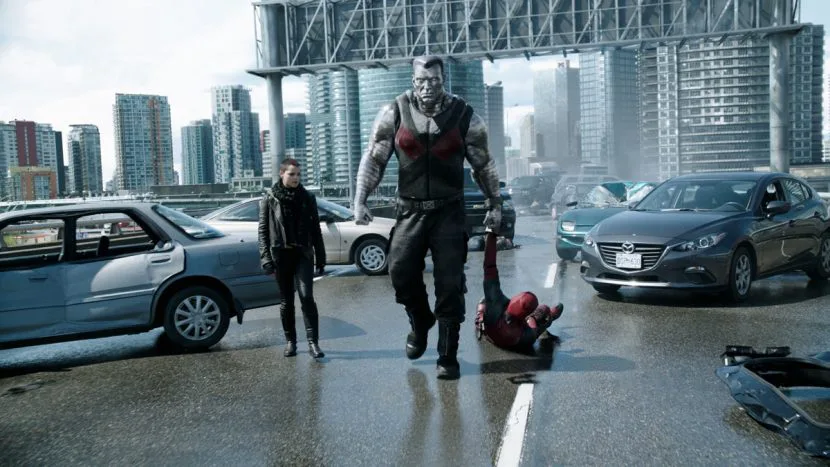
The key criterion is whether VFX helps viewers understand product features or brand concepts rather than merely creating visual spectacle. If removing VFX shots leaves the core message intact, the VFX ratio is too high. Conversely, if live-action cannot adequately depict product performance in specific scenarios, adding VFX is justified. Brands should prepare a feature list specifying which functions can be shown via live-action, which require VFX simulation, and which can be implied through editing rhythm. This list directly impacts storyboard design and budget allocation.
The risk is that an excessive ratio of VFX can extend post-production timelines, increase revision costs, and make the commercial appear unrealistic. An exception applies when the product itself is a virtual service or digital product, where a high VFX ratio is justified; however, human interaction shots from live-action footage remain essential. If the brand cannot clearly define VFX requirements during pre-production, the post-production team will face repeated rework, resulting in a final deliverable that looks neither fully live-action nor fully CG, satisfying neither approach.
The ratio of VFX to live-action must be specified in the creative brief during the project initiation phase.
The creative brief is the core document for a TVC project, and the VFX-to-live-action ratio must be quantified within it. The brand should require the production team to specify the execution method for each key shot in the brief—whether pure live-action, live-action with compositing, or full CGI—along with the expected outcomes and risks for each approach. For example, a rotating product shot can be filmed practically with post-production stabilization and reflection enhancement, or generated entirely via 3D modeling, though the latter requires longer modeling and rendering times.
Materials to be prepared by the brand include high-resolution product photos, three-view drawings, material specifications, usage scenario descriptions, and screenshots of effective shots from competitor ads. These materials help the production team determine which VFX are feasible and which require simplification. Meanwhile, the brand must clarify its communication objectives—whether enhancing brand image or driving short-term sales—as this determines the extent of VFX exaggeration. If the goal is to establish a tech-forward aesthetic, VFX can be bolder, provided the product's core selling points are not overshadowed.
The production team must create an animatic preview based on the creative brief, using simple 3D models or animation to indicate the VFX scope for each shot. This preview need not be high quality but must clearly visualize the integration points between live-action and VFX for the brand. If a VFX shot appears unnatural in the animatic, the brand can request changes early rather than waiting until after filming. Conversely, if the VFX ratio is not clearly defined in the creative brief, the post-production team cannot accurately estimate man-hours and costs, leading to loss of schedule control.
Sufficient footage and tracking markers must be reserved for VFX during the shooting phase.
The quality of integration between live-action and VFX largely depends on adequate VFX preparation on set. The crew must place tracking markers—including reflective spheres, grid boards, or color charts—in every shot requiring compositing to help post-production software identify camera movement and lighting direction. Without on-set markers, compositing relies on manual tracking, which is time-consuming and prone to jitter or perspective errors.
On set, the brand must verify that sufficient backup footage is captured for each VFX shot, such as empty backgrounds from various angles, lighting variations at different intensities, and multiple takes of actor performances. This backup footage is used during compositing to match lighting and occlusion. For instance, a shot of a product flying through the air may involve filming a static product and simulating flight via VFX; however, without clean background plates, the product cannot be naturally integrated into the scene.
A key risk is the crew neglecting additional shooting requirements for VFX shots to save time, resulting in missing critical assets in post-production. An exception occurs when VFX are entirely CG-generated, requiring only actor performance and interaction footage; even then, eye-line references for virtual objects must be filmed. Failure to record on-set lighting color temperature and intensity data prevents accurate color grading, causing a mismatch between VFX and live-action lighting. Ultimately, incomplete footage directly extends post-production schedules and may necessitate reshoots, significantly exceeding budget.
Controlling the ratio of VFX to live-action during post-production is a dynamic adjustment process.
Post-production focuses on continuously adjusting the ratio during editing to balance narrative pacing with visual impact. Editors first create a rough cut based on the script and storyboard to determine the duration and sequence of each shot. The VFX team then steps in to create pre-composites for shots requiring compositing. These pre-composites are typically rendered at low resolution, allowing the brand and director to quickly assess whether the integration of VFX and live-action footage appears natural.
The criterion is whether VFX shots visually integrate into the live-action environment, including lighting direction, color saturation, and depth of field. If VFX elements appear to float over the image, it indicates issues with scale or matching. In such cases, the post team must adjust opacity, blur, or add grain to match the texture of the live footage. Brands should participate in reviews at this stage but focus on whether VFX serves the product's selling points rather than just its spectacle. For example, in a shampoo ad, overly exaggerated simulated hair shine may cause viewers to doubt the product's authenticity.
A risk is that the VFX team’s pursuit of perfection leads to endless refinements, causing the post-production schedule to spiral out of control. An exception applies when there are few but highly complex VFX shots; these should be prioritized as they define the ad's visual standard. Frequent creative changes by the brand during post-production will constantly alter the VFX-to-live-action ratio, potentially causing the final deliverable to deviate from the original brief. Consequently, the post team must establish version control and document every revision to ensure decision traceability.
Color grading and sound design represent the final hurdle in integrating VFX with live-action footage.
Brands often overlook color grading and sound, yet they are critical for controlling the balance between VFX and live action. Colorists must unify the color tone and contrast across all shots to minimize discrepancies between live footage and VFX elements. For 3D-generated elements, colorists must adjust shadows and highlights based on the live footage's color temperature curve; otherwise, the artificial nature of the VFX becomes obvious to viewers.
Sound design also influences the perception of VFX. Audiences more readily accept the realism of a VFX shot when accompanied by authentic ambient sounds and material-specific audio effects. For instance, a product transformation scene lacking metallic friction or motor sounds will feel hollow regardless of visual refinement. During acceptance, brands should request before-and-after color grading screenshots and various sound mix versions to verify if expectations are met.
The standard is whether visual and auditory differences between VFX and live-action shots fall below human perception thresholds after grading and sound design. Significant discrepancies require returning to the VFX team for adjustments. A risk arises from poor communication between grading and sound teams, leading to mismatched visual and audio rhythms. An exception occurs when an ad intentionally pursues stylized effects, allowing unconventional grading and sound provided the brand approves. Failure to pass grading and sound acceptance necessitates reworking the entire film, increasing both cost and timeline.
The acceptance checklist must cover every aspect of the VFX-to-live-action ratio.
When accepting a TVC, brands should not rely solely on the overall effect but must itemize checks to ensure a reasonable VFX-to-live-action ratio. The acceptance checklist should include the following: First, verify if lighting direction in each VFX shot matches the live footage and check for visible edge aliasing or chromatic aberration. Second, confirm that VFX elements align with actor performances and physical interactions, such as hand shadows falling correctly on a product when picked up. Third, ensure VFX motion speed matches live camera movement without stuttering or frame skipping.
Fourth, verify that sound effects synchronize with VFX actions, such as explosion sounds coinciding precisely with visuals. Fifth, ensure subtitles and graphics remain readable when overlapping with VFX elements. Sixth, confirm the master format meets delivery platform requirements regarding resolution, frame rate, and codec. Brands should request a VFX shot list detailing the type, production method, and acceptance criteria for each shot to facilitate line-by-line verification.
The risk is that brands focus solely on visual aesthetics while overlooking technical details, causing playback compatibility issues across devices after delivery. An exception applies when ads air on a single platform, allowing simplified acceptance criteria, though basic technical checks remain necessary. If any step is missing from the acceptance checklist, the post-production team may not proactively correct it, potentially leaving flaws in the final deliverable. Consequently, brands must establish a sign-off process where production proceeds to the next stage only after each step is confirmed.
Identify in advance when VFX-to-live-action ratios are inapplicable.
Not all TVCs are suitable for planning via VFX-to-live-action ratios. When featuring physical products in authentic usage scenarios, excessive VFX can undermine credibility. For instance, high-definition live footage often conveys food appeal more effectively than digital enhancements. In such cases, VFX should only remove shooting imperfections like background clutter or skin glare, rather than adding virtual elements.
Additionally, when budgets or timelines are tight, minimize VFX usage as its production and revision costs far exceed live action. An exception exists for virtual products like software or games where VFX is essential, though live footage remains necessary to demonstrate realistic user interaction. If unsure about VFX necessity during pre-production, request comparative tests from the production team—one live-action-focused and one VFX-heavy—to guide your decision.
The risk is that brands, misled by reference videos, assume more VFX equals higher quality while ignoring product characteristics and budget constraints. Without clearly defined exclusion criteria before kickoff, post-production teams face endless revisions. As a deliverable safeguard, contracts should specify the scope and adjustment mechanisms for VFX-to-live-action ratios to prevent downstream disputes.
The next step is to start with minimal VFX testing.
Brands launching TVC projects should avoid rushing into heavy VFX; instead, select a key shot to produce a test clip combining live action and VFX. This clip need not be complete but must include raw footage, VFX elements, and preliminary color grading and sound design. Testing allows brands to visually assess whether the VFX-to-live-action balance is appropriate while evaluating the team's technical capability and communication efficiency.
After testing, adjust the creative brief and budget allocation before entering formal production and post-production. This approach validates major risks at minimal cost, preventing loss of control over VFX ratios late in the project. If test results are unsatisfactory, brands can pivot or change vendors without significant loss. Remember, balancing VFX and live action is a dynamic process based on product, audience, and communication goals; only practical testing reveals the optimal solution.
If you are preparing a TVC project, gather your brief, visual references, product or corporate materials, delivery platforms, and licensing scope before reviewing theTVC Services PageTranslate abstract preferences into actionable production boundaries through communication.