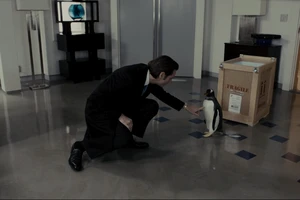
Why Product Prop Continuity Must Be Addressed During TVC Pre-Production
TVCs typically require the same product to appear consistently across multiple shots, scenes, and even shooting days. Product prop continuity directly determines the credibility of the final cut. Viewers may not scrutinize every frame, but any inconsistency in product condition, packaging, labels, or accessory placement can undermine brand trust. Prop continuity must be treated as a standalone issue during pre-production rather than handled ad hoc on set.
Brands should prepare multiple backup units of the physical product, including different batches, packaging versions, and usage states. The production team must verify whether the product has design patents, copyrighted packaging, or special material requirements, as these factors affect how props are replicated or modified. If the product requires disassembly or modification, confirm in advance whether this will void warranties or affect product certifications.
The standard requires that product prop continuity plans be documented in the storyboard notes of the shooting script. Each shot must include written descriptions of the product's condition, orientation, label placement, and any scratches or wear. Without these details in the script, production relies on on-set memory, posing significant risk. An exception applies if the product is purely digitally rendered or AIGC-generated; in such cases, continuity is controlled via 3D files and generation parameters rather than physical props, though digital asset versions must still be managed separately.
What materials should the brand prepare for prop continuity?
The brand must provide at least high-resolution multi-angle product photos, specification sheets, packaging design source files, user manuals, and descriptions of common usage scenarios. These materials help the production team understand the product's structure, materials, and potential wear patterns. If the product has specific colors, textures, or reflective properties, color swatches or physical samples must also be provided to prevent color discrepancies during filming.
Based on these materials, the production team must create a prop list detailing the quantity, condition, and accessories required for each shot. The list must cover all visible elements, including the product itself, packaging boxes, manuals, labels, seals, and anti-counterfeiting codes. Every prop must be numbered, with its source, batch number, and current condition recorded. The brand must verify that the list covers all shots, particularly close-ups and product-in-use sequences.
A key risk is that the brand may provide only one unit, whereas filming often requires multiple identical units to depict different states. For example, showing a product transitioning from sealed to opened to used requires at least three separate props. With only one unit, post-production would need CGI or AIGC fixes, which are costly and yield uncertain results. An exception applies to consumables or single-use items; sufficient backups must be prepared, and props should be tested under various lighting conditions in advance.
How to control prop continuity during filming using storyboards and script supervision
Before filming, the director and art director must jointly confirm the prop setup for each shot and create a prop status chart. This chart lists, by shot number, the prop's placement, orientation, angle, label visibility, whether the product is open, liquid or powder levels, and acceptable fingerprints or smudges. The chart should be printed and posted near the monitor for the director, cinematographer, and script supervisor to reference at any time.
Before each shot, the script supervisor must verify that the prop setup matches the status chart and take reference photos. After filming, the script supervisor must take photos again to confirm no unintended changes occurred. If a prop's state changes during filming—such as the product being moved, packaging opened, or liquid spilled—the script supervisor must immediately document it and notify the director. The director then decides whether to reshoot or adjust subsequent shots.
The standard requires at least one prop status photo per shot, archived by shot number. For multi-day shoots, props must be inventoried before wrap each day to ensure none are lost or damaged. If props need restoration, such as reapplying labels or refilling liquids, dedicated personnel must handle this and record the restoration time. An exception applies to food or cosmetics: if restoration is unhygienic or violates regulations, new props must be used instead of risking reuse.
How to use editing and color grading to correct prop flaws in post-production
During post-production, editors must check prop continuity in each shot against script supervisor photos, prioritizing shots with consistent states. If a prop's state is visibly inconsistent, such as a shifted label or different product orientation, editors should attempt adjustments via flipping, scaling, or cropping without altering the product's shape or proportions. If adjustments fail, consider replacing the shot or using CGI fixes.
Color grading can unify color temperature and contrast across shots but cannot correct physical prop placement or missing items. If product surface reflections or shadows are inconsistent, colorists can soften them with local masking, though over-processing degrades image quality. Ideally, control lighting angles during production to ensure consistent reflections, limiting post-production to minor tweaks.
CGI or AIGC can repair prop defects like scratches, stains, or detached labels, provided high-resolution texture maps or reference images are available. Assess cost and time before repair; if defects appear in prolonged close-ups, fixing may cost more than reshooting. Defects affecting key selling points, such as brand logos or function buttons, must be fixed or reshot. Non-critical defects may be accepted or avoided through editing.
How Acceptance Checklists Cover Every Aspect of Prop Continuity
Acceptance reviews must verify prop continuity item by item, not just overall visual appeal. The checklist should include: whether product appearance matches brand references regarding color, material, gloss, and finish; whether text, graphics, and labels on packaging are legible and correctly positioned; whether the product's usage state is realistic, including liquid levels, powder form, or electronic screen displays; whether accessories like charging cables, manuals, or dust bags are complete; and whether product orientation and placement remain consistent across shots without axis jumps or flips.
Each checklist item requires a pass/fail determination with specific shot numbers and timecodes recorded. If an item fails, specify whether to reshoot, fix in post, or accept as is. Brand representatives should participate in acceptance reviews, as their familiarity with product details helps identify issues the production team might miss. Retain acceptance records until project completion to guide future revisions.
A key risk is focusing solely on the final deliverable while neglecting masters and source files. Prop states may differ between the color-graded master and ungraded raw footage. Since future edits require source files, verify their completeness during acceptance, including all raw footage, audio, project files, and prop reference photos. If only the final video is delivered with no anticipated edits, source file requirements may be simplified, but at least one backup set must be retained.
When Prop Continuity Management Does Not Apply
Prop continuity management does not apply to all TVCs. For purely digital or virtual products like software, games, or digital services, there are no physical props; continuity is governed by UI design or animation logic. For service-based products like travel or finance, props may be merely symbolic, such as passports or bank cards, requiring lower continuity standards while maintaining visual consistency.
For fully AIGC-generated content where props are controlled by prompts or model parameters, continuity depends on model stability. Since AIGC product appearances may vary between frames, post-production unification is often required. In this case, continuity management shifts to recording generation parameters and version control rather than managing physical objects. For extremely short projects, such as single-day shoots with few shots, continuity risks are lower but should not be ignored entirely; verbal confirmation and quick reference photos are the minimum requirement.
An exception applies if the product itself is perishable, such as flowers or food, causing prop conditions to change over time and making perfect continuity impossible. In such cases, accept natural changes and plan the progression in the script, such as a transition from fresh to wilted. Forcing control can make the scene appear unnatural. The rule is that when product changes are part of the narrative, prop continuity management should shift to managing change rather than maintaining a fixed state.
Next Steps
Prop continuity management is a key thread running through TVC project development, filming, and post-production. Brands and production teams should finalize the prop list and status chart at the first project meeting and assign a dedicated manager. For projects involving complex props or multiple shoot days, teams should conduct advance prop tests by photographing products under various lighting conditions with a phone to assess continuity risks. Test results help determine whether duplicate props or post-production fixes are needed. For most TVCs, thorough pre-production, strict adherence to the status chart during filming, and item-by-item verification during post-production review keep continuity issues within acceptable limits. For smaller projects or simple products, workflows can be simplified, but photo documentation and a status chart should be retained to prevent on-set confusion.
If you are preparing a TVC project, start by organizing your brief, visual references, product or company materials, delivery platforms, and licensing scope before reviewing theTVC Service Pageto translate abstract preferences into actionable production parameters.