Translate selling points into filmable actions during the pre-production phase.
The core focus of a TVC ad is to let viewers see the selling point in action. Brands often mistakenly hand the production team a slogan like "more durable" or "smarter," expecting the director to improvise. This turns the shoot into a guessing game, only for editors to discover later that the footage fails to support the selling point.
A selling-point breakdown meeting should be completed during pre-production. The brand must provide the actual product or a high-fidelity model and list no more than three core selling points, each mapped to an observable action. For example, "waterproof" corresponds to "water splashed on the body beads up and rolls off," while "lightweight" corresponds to "holding the device steady with one hand for three seconds." The action must be capturable on camera and instantly understandable to viewers without voiceover explanation.
The criterion is that if a selling point cannot be clearly conveyed visually within ten seconds, the action evidence is insufficient. In this case, return to the product design team to identify visualizable details in physical features or usage scenarios. The risk is that brands may cram multiple selling points into a single TVC, leaving only two seconds per action and resulting in vague audience recall. It is recommended that each TVC focus on one primary selling point, reserving others for a video series.
An exception applies to abstract selling points, such as "safety" or "trust." These require demonstration through contrasting actions or consequences, such as a sequence showing a device automatically powering off after a child accidentally touches the switch. If the product lacks obvious movement, capture user reactions, such as "a user breathing a sigh of relief" or "a bystander nodding." However, reaction shots must immediately follow the product action; otherwise, viewers cannot establish a causal link.
Project initiation deliverables include a selling-point action list featuring three to five candidate actions per point, noting shooting difficulty and required props for each. This list must be distributed to the director, cinematographer, and production designer as a basis for storyboard discussions. If any action requires special equipment or locations, it must be flagged during project initiation, as reshoot costs are extremely high.
The storyboard must break down actions into executable shot sequences.
The storyboard focuses on breaking action evidence into a timeline of shots. Each action requires at least three shots: the preparatory state before the action, the key moment of the action, and the resulting state afterward. For example, depicting "water droplets sliding off" requires a close-up of water resting on the surface, a medium shot showing the rolling path, and a close-up confirming a dry, residue-free surface.
During storyboarding, the production team must specify the framing, camera angle, movement, and duration for each shot. The brand must verify that each shot genuinely demonstrates the selling point rather than merely pursuing visual aesthetics. A common issue is directors adding excessive B-roll or transitions for visual impact, compressing selling-point actions to under one second. Acceptance criteria require a minimum total duration of three seconds per selling-point action, with close-up coverage of key moments.
A risk is that overly complex storyboards may exceed budget or schedule constraints, such as requiring underwater or high-speed photography without prior equipment confirmation. It is advisable to tag each shot’s priority in the storyboard as either mandatory or optional. If on-set time runs short, prioritize completing mandatory shots. Brands should participate in storyboard reviews, focusing on verifying complete action evidence rather than fixating on color grading or composition.
Exceptions apply when product actions are inherently fast, such as "instant cooling" or "rapid autofocus." These require high-speed photography or post-production VFX, which must be explicitly noted in the storyboard. If using VFX, confirm in advance that the VFX team can provide reference footage to avoid discrepancies between final results and expectations. After finalizing the storyboard, conduct a technical rehearsal by filming rough action tests with a phone or basic camera to validate the action logic.
During production, maintain the completeness and continuity of action evidence.
The most critical on-set responsibility is ensuring every piece of action evidence is fully captured. Cinematographers must not focus solely on aesthetics but also verify that actions are completed within the frame. It is recommended to station an action supervisor beside the monitor, appointed from the brand or production team and familiar with the selling points. The supervisor’s task is to confirm uninterrupted product actions in every shot, such as verifying whether water droplets actually slide off or switches are truly triggered.
Maintain action continuity during filming. Each selling point must be portrayed consistently across shots, including product orientation, lighting, and motion speed. For example, when filming a "one-handed lift," if the product is tilted 15 degrees in the first shot, the second shot must match that angle to avoid editing mismatches. Capture at least three angles per action and log the camera settings for each take.
On-set action changes risk deviating from the storyboard. Directors may alter performances for effect without timely brand approval. To prevent this, require joint sign-off by the action supervisor and director for any adjustments and update the storyboard accordingly. Insufficient props are another risk; for instance, needing multiple units to show different states but having only one sample on set. Prepare at least two identical units in advance and ensure they look consistent.
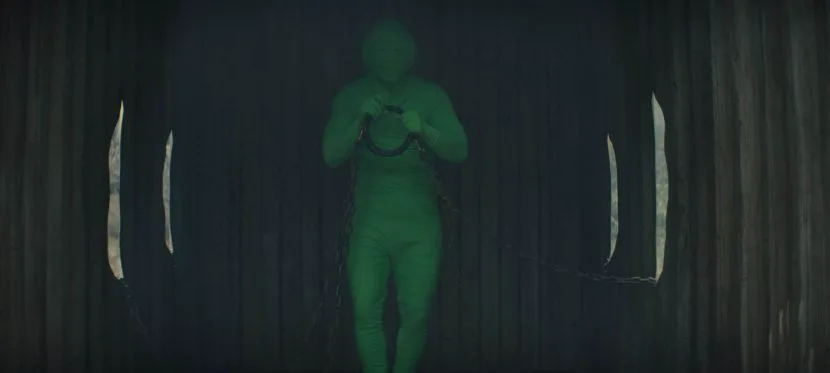
Exceptions apply when actions cannot be performed safely, such as in high-temperature or hazardous environments. Stand-in props or CGI may be used, but visual standards must be approved by the brand beforehand. If using CGI, capture reference footage of the product against a solid background and record lighting direction. Review footage immediately after shooting to confirm at least one usable take per action, and reshoot any inadequate takes the same day.
In post-production, let visual action evidence replace voiceover narration.
The primary editing principle is to let the action speak for itself rather than relying on voiceover or subtitles. If viewers need subtitles to understand the selling point, the action breakdown has failed. Editors should arrange footage sequentially so each selling point forms a distinct narrative segment with clear cause-and-effect. For a "water bead sliding" segment, for example, show the surface condition first, then the bead's movement, and finally the dry result.
Editing pace should match the physical speed of the action. Fast actions suit quick cuts, while slow actions require longer takes to reveal detail. Start with a rough cut, limiting each selling-point segment to five to ten seconds, then review repeatedly to remove any footage that does not demonstrate the action. If an action cannot be presented coherently with existing footage, return to production for reshoots instead of masking issues with effects.
A key risk is editors sacrificing action integrity for pacing, such as cutting the middle of a "water bead slide" and keeping only the start and end. This undermines perceived authenticity. Acceptance criteria require that every key moment of a selling-point action be shown completely, with cuts between at least two angles. When using slow motion, ensure the playback ratio remains realistic to avoid distortion.
An exception occurs when visual evidence alone is insufficient and requires sound design reinforcement. For a "silent operation" selling point, add ambient noise contrast: loud sound before the action and complete silence afterward. Sound design should be integrated during editing, not added hastily during mixing. After editing, export a silent version to verify the visuals still convey the message; if not, re-edit.
Color grading and sound must enhance the clarity of the action evidence.
Color grading should not prioritize style over visibility of product color and action details. Overly dark or high-contrast images can obscure details like water beads or buttons. Retain accurate product colors during grading and apply stylization only to backgrounds and atmosphere. The brand should provide a standard color chart as the reference for correction. During acceptance, review the final video under various brightness levels to ensure action details remain visible in both shadows and highlights.
Sound design must distinguish between action sound effects and background music. Action sound effects include mechanical sounds, water sounds, and button clicks; these must be realistic and clear, not completely obscured by music. Background music volume should be lowered during action moments to make room for sound effects. The brand must verify that action sound effects match the actual product sounds. If the product is inherently silent, appropriate exaggeration is acceptable, provided it does not mislead the audience.
The risk lies in excessive color grading and sound processing, which can distort the evidence of action. Examples include altering product colors to differ from reality or making button clicks unrealistically loud. To address this, establish two acceptance checkpoints: one after color grading and another after audio mixing. Both the brand and production team must review each stage together and document revision notes. If revisions exceed three rounds, reassess the quality of the original footage and return to the shooting phase if necessary.
An exception applies when TVCs are distributed across multiple platforms, as different platforms apply varying levels of color and audio compression. It is recommended to produce multiple versions before delivery, including standard, vertical, and silent versions. Each version requires individual color grading and mixing rather than direct compression from the master file. The brand should confirm the latest specifications for each platform based on official guidelines to prevent upload failures after delivery.
Delivery acceptance must be confirmed item by item at each stage, avoiding reliance solely on the final video.
Deliverables for a TVC project extend far beyond the final video. Acceptance stages for the brand include the script, storyboard, raw footage, editing project files, color-graded versions, mixed audio versions, subtitle files, master files, and source files. Each stage requires separate confirmation and cannot be judged solely by the final output. It is recommended to create an acceptance checklist at project initiation, specifying delivery standards and deadlines for each stage.
During final video acceptance, verify that the evidence of action is complete, voiceovers are not redundant, and subtitles do not obscure key visuals. Also, ensure all required versions are present, such as various durations, vertical formats, and textless versions. If AIGC or CGI is used, confirm the copyright ownership and usage scope of generated assets. Source files must include all original footage and project files to facilitate future modifications.
A key risk is the brand focusing only on the final video while neglecting source and copyright files, rendering future modifications impossible. For instance, a platform may require a subtitle language change, but the source files lack subtitle tracks. To mitigate this, require the production team to provide a complete file list during acceptance and test-open project files on-site. Any missing or corrupted files must be resolved before final payment.
An exception occurs when TVC projects require phased delivery, such as delivering a rough cut for internal review followed by a fine cut. Each delivery phase must have clear acceptance criteria and cannot rely on verbal confirmation. Written sign-off forms should be used to record version numbers and feedback for each delivery. Once final acceptance is approved, retain all communication records as evidence for any future disputes.
Applicable Scope of Deconstructing Evidence of Action in TVCs
Deconstructing evidence of action is suitable for functional products like appliances, electronics, automobiles, and tools, where selling points can be demonstrated through physical actions. For emotional brands or service-based products like luxury goods, finance, or education, evidence of action may be less direct and require contextual scenes and human reactions. In such cases, it can be deconstructed into 'actions within usage scenarios,' such as 'opening a wallet' or 'tapping a screen,' though the effect is less pronounced than with functional products.
Inapplicable scenarios include selling points that are too abstract to translate into actions, such as "ultimate value" or "industry-leading." Forcing these into physical actions appears inauthentic; for example, using "counting money" to represent value will not convince viewers. Use comparative data or user testimonials instead of action-based proof. Another exception involves products without visible actions, such as software or services. In these cases, break down the concept into "user interactions" or "interface feedback," though this requires screen recording or animation.
The risk lies in brands assuming all TVCs suit action-evidence breakdowns, which limits creativity. If a product's selling point is emotional, such as "companionship" or "growth," action evidence feels forced. In such cases, revert to traditional storytelling to convey the message through narrative. Production teams must clearly inform brands during project initiation about which selling points suit action evidence and which do not to avoid rework later.
An exception applies to hybrid products featuring both functional and emotional selling points. For instance, a smartwatch may offer "water resistance" alongside the emotional benefit of "health management." Prioritize demonstrating functional actions first, then supplement with emotional shots. However, balance the ratio carefully to avoid losing emotional resonance through excessive functional focus or obscuring functionality with too many emotional scenes. Clearly define primary and secondary elements in the storyboard.
The next step is to start validation with the smallest possible action evidence.
If you are preparing a TVC project, do not rush to write a full script or hire a director. First, select one core selling point and break it down into a single action proof. Shoot a 15-second test video on your phone and show it to people unfamiliar with the product to see if they can identify the intended message. Proceed to formal project approval only if the test feedback is accurate. This test video can also serve as a reference for the production team, reducing communication costs.
During the kickoff meeting, require the production team to provide past case studies or test clips featuring similar selling points rather than just listening to their pitch. If the team cannot provide specific action references, it indicates an insufficient understanding of the selling point. Also, confirm whether the team has the capability to handle required specialized filming or post-production techniques, such as high-speed photography or CGI. If the team lacks experience, consider a phased approach: conduct small-scale testing first before deciding whether to proceed.
Finally, remember that a TVC's effectiveness depends on solid preliminary analysis, not flashy post-production effects. Once the action evidence is established, filming and post-production are merely execution phases. Investing time in breaking down selling points is far more valuable than repeatedly revising the final cut. We hope this article helps you transform selling points into visuals that audiences can easily understand.
If you are preparing a TVC project, gather your brief, visual references, product or corporate materials, delivery platforms, and licensing scope before reviewing ourTVC Services pageto translate abstract preferences into actionable production parameters.