The most exciting thing about AI product-model videos is that a single product image can be extended into versions featuring different people, settings, and markets; the greatest risk of failure comes from precisely the same fact that “every variation can be generated.” Faces change, clothing changes, and product proportions change: one shot still looks like part of the same campaign, while the next looks as if the brand has suddenly been replaced.
To bring AI models into real advertising production, do not begin with one long prompt. Start by creating a continuity bible: only after the rules for characters, clothing, actions, shots, products, and disclosure have been locked can generation move from a lucky draw for inspiration to a production process that can be reviewed.
Define character assets first; do not pursue only “the same face”
Character continuity encompasses more than facial features. Hair silhouette, makeup intensity, skin-tone baseline, body proportions, perceived age and temperament, habitual expressions, and brand posture must all form a comparable set of reference frames. Beauty and sports brands understand “confidence” in entirely different ways—one may favor restraint, the other energy—so character performance must follow the brand voice.
We recommend first generating four types of baseline images: front view, three-quarter view, profile, and half-body action. Then create a one-page list of character exclusions covering expressions, makeup, jewelry, gestures, and lens distortions that must not appear. Compare every subsequent video with these baselines. If it fails, return it to the generation stage instead of making color grading and editing pay for character drift.
A five-layer control board turns continuity into a review language
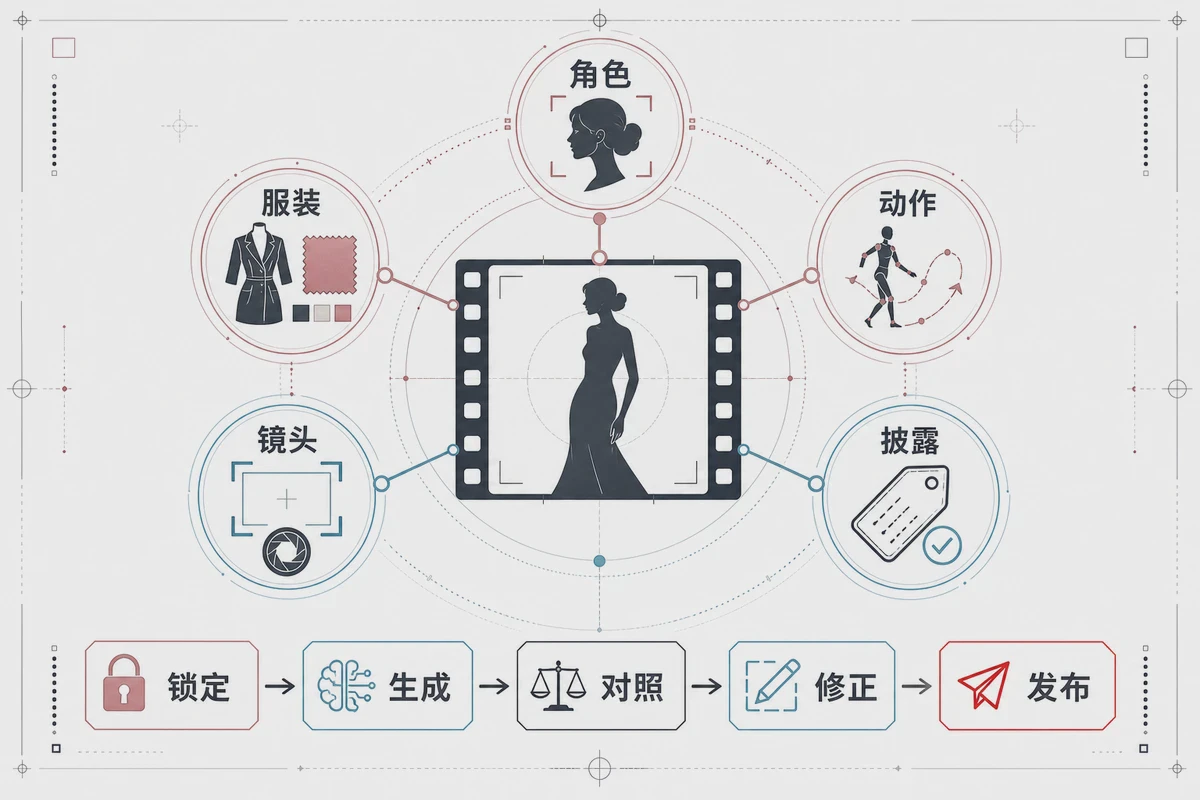
During reviews, stop using vague feedback such as “it doesn’t feel like the same person.” Sort issues into five folders: whether the character has drifted, whether clothing materials remain continuous, whether actions follow human-body logic, whether the shots remain within the same visual system, and whether the necessary disclosure has been completed for publication. The more specific the feedback, the less regeneration is required and the easier it is for the campaign to maintain a consistent tone.
Product realism must take priority over an attractive model
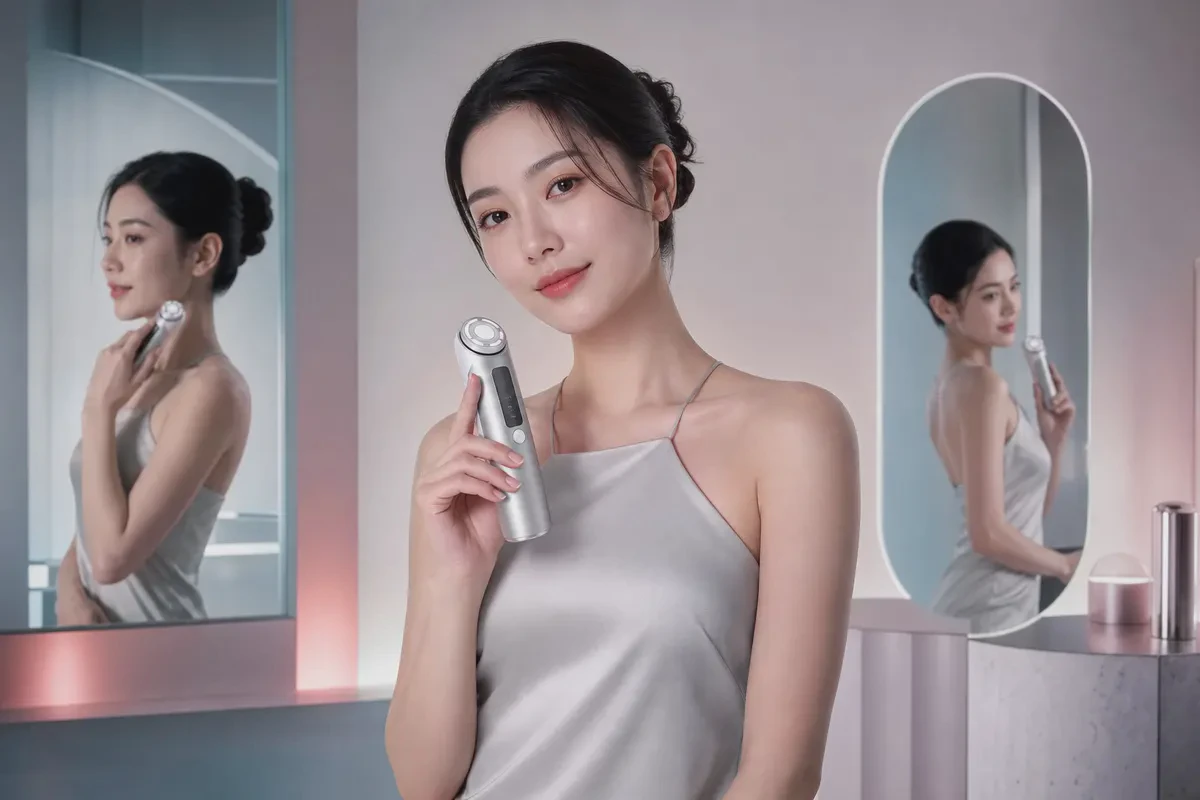
A product video is not a digital-human demo reel; the product must anchor every shot. Product references must establish package proportions, Logo placement, the number of buttons, interface structure, liquid color, and direction of use. For handheld use, carefully inspect contact points, occlusion relationships, the number of fingers, the direction of force, and mirrored reflections.
One practical approach is to divide shot review into two tracks: the first evaluates only the character and performance, while the second evaluates only product structure and evidence for selling points. A shot cannot enter editing if the character passes but the product is distorted. When necessary, use a real packshot, partial live-action footage, or a 3D product to replace generated portions, keeping the “person” flexible and the “product” accurate.
Action design must specify verbs as well as starting and ending points
“The model uses the product elegantly” is too loose. A more controllable description would be: the right hand picks up the device from the table and pauses at shoulder height; the gaze moves first to the product and then to the camera; at the end of the action, the front of the product remains visible. When the verb, path, pause, and final composition are all explicit, consecutive shots have usable edit points.
The same applies to camera movement. Push-ins, lateral moves, orbiting, and locked-off shots each serve different purposes; do not pack every kind of motion into a single short shot. You can follow the shot system for AI product-video prompts, placing the sense of focal length, shot size, light direction, product proportion, and closing negative space into repeatable fields.
Clothing and settings need interfaces for multi-market versions
Cross-border campaigns often need to change seasons, skin tones, languages, and lifestyle settings. A more reliable approach is not to invent a new model for every market, but to retain the same core character while adjusting clothing layers, props, backgrounds, and the context of actions. Brand colors can appear in parts of the clothing or in environmental practical light; they do not need to fill every shot.
At the same time, define in advance which elements may change and which must never change. Product appearance, the core character, key-light logic, and packshot composition are usually locked items; set props, local colors, subtitle areas, and the opening hook can be version variables. This enables localization without fragmenting the brand’s visual identity.
Put platform disclosure in the delivery sheet; do not remember it only before launch
The more realistic an AI character looks, the earlier transparency must be addressed. TikTok’s guidance on AI-generated content requires realistic images, audio, and video to be labeled according to its rules; YouTube’s guidance on disclosing altered or synthetic content also requires disclosure for relevant content that appears realistic.
Therefore, in addition to duration, aspect ratio, subtitles, and audio tracks, the version sheet should include “contains realistic AIGC,” “character or voice authorization status,” “platform disclosure toggle,” and “generation source and modification record.” This does not put the brakes on creativity; it allows the finished video to move smoothly into media placement, client review, and later reuse.
Frequently asked question: can AI models completely replace live action?
Which products are better suited to trying AI model videos first?
Categories in which character atmosphere and setting variations offer high value, while product structure is relatively stable, are easier to implement—for example, fashion accessories, some beauty content, and lifestyle shorts. When precise operation, medical claims, or proof of complex physical forces is required, retain more live-action evidence.
Why does the same character still drift across ten videos?
A common reason is that there is only one facial reference, with no locked hairstyle, clothing, body proportions, lighting, or shot language. Character consistency is the combined result of the entire set of visual variables.
How can subjective disputes during client reviews be reduced?
Approve the character baseline, product baseline, and one motion test before moving into batch generation. Compare only clearly defined fields in each round, and retain the approved reference; do not redefine the character while producing in bulk.