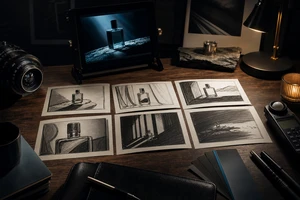
How should an advertising production budget be built? First remember an answer that is not especially pleasing but is reliable: there is no universal per-minute price for advertising. A 30-second high-speed liquid shoot in a studio may cost more than a two-minute corporate interview. The same script performed by ordinary talent, a celebrity, or a 3D character also creates entirely different cost structures. A reasonable budget does not pursue the lowest number; it places money where audiences can truly see it and the brand can truly use it.
Where Does the Budget Start? Define the Business Task First
First answer whether the video serves brand awareness, a product launch, sales conversion, or investor and partner trust, then define primary channels and period of use. Wyzowl’s 2026 Video Marketing Survey shows that respondent marketers measure ROI across viewing, engagement, leads, brand, and sales. Different goals justify different shots and versions. Without metrics, the budget can only become an equipment list.
Cost One: Creative and Pre-Production Are Not a “Free Proposal”
Strategy, concept, script, storyboard, production budget, location scouting, casting, tests, and PPM determine whether later work can be done correctly the first time. Pre-production appears not to contain a finished film, yet it prevents rework most effectively. When a vendor writes this cost as zero, the fee is usually hidden in execution or the work is not truly being done.
Cost Two: Talent, Locations, and Art Direction Define the World
Talent count, likeness rights, territories, and usage term affect cost. Locations involve rent, construction, set dressing, transport, restoration, and overtime. Product advertising may also require custom props, stand-in samples, and multiple packaging sets. If you want it to “look like an international advertisement,” first check whether the world is complete rather than merely upgrading the camera.
Cost Three: Shooting Days Matter More Than Film Length
The price of advertising production usually depends first on the number of shoot days, company moves, and lighting windows. Each added day expands the director’s unit, camera, lighting, equipment, vehicles, locations, and talent together. The most effective way to control cost is not suppressing line-item quotes but using storyboards and scheduling to increase the density of usable shots in each shoot day.
Cost Four: Equipment Must Serve Shot Tasks
Motion-control robots, high-speed cameras, telescopic cranes, drones, and special lenses all have clear value, but they should not decorate a quotation. An equipment upgrade is worthwhile only when a shot needs repeatable movement, extreme slow motion, an unusually long path, or special perspective. See Suitable Scenarios for Motion-Control Robot Filming to judge whether equipment truly contributes visible value.
Cost Five: Post-Production Complexity Is Often Underestimated
Editing is only the beginning. It is followed by cleanup, compositing, 3D, motion graphics, color grading, music rights, sound design, voiceover, subtitles, and masters. Product cutaways, liquid replacement, screen content, and layered effects must be calculated shot by shot. The earlier VFX is confirmed during scripting, the better the team can decide what to film and what to create in post.
Cost Six: One Main Film Has a Version Matrix Behind It
The website, YouTube, Amazon, TikTok, trade shows, and sales channels require different aspect ratios, durations, subtitles, and CTAs. Taking a brand overseas also adds languages, voiceover, and territorial rights. Wyzowl’s Video Strategy Guide emphasizes that video is distributed across landing pages, social media, email, and other touchpoints. Listing versions clearly during budgeting is far less costly than cutting them hurriedly before delivery.
A Practical Ratio Framework
There is no universal standard, but a standard live-action project can use ratios for a first stress test: approximately 15%–25% for creative and pre-production, 40%–55% for on-set production, 20%–35% for post-production, plus a 5%–10% contingency. This is not a quotation table but a checklist. If an item is unusually low, ask whether work is missing; if unusually high, confirm whether it carries the core creative idea.
Where You Can Save and Where You Should Not Force Savings
Save by combining settings, reducing unproductive moves, using real spaces, locking props early, and capturing all versions in one shoot. Do not force cuts in safety, data backup, core talent, product testing, sound, or final color. Audiences may not recognize equipment models, but they immediately feel unconvincing performance, cheap sound, or distorted product materials.
When Comparing Three Quotations, Do Not Look Only at the Total
- Are creative, script, storyboard, and revision rounds explicit?
- Are talent, locations, equipment, transport, and overtime listed with tax?
- Which territories and terms do music, font, likeness, and asset rights cover?
- Which VFX, grading, sound, and subtitles does post-production include?
- How will landscape and vertical versions, short cuts, multilingual versions, and project archives be delivered?
- Are cancellation, postponement, weather, and overtime mechanisms written into the contract?
When the Budget Is Limited, Protect These Three Things First
First protect the core insight so the film has one memorable statement. Second protect product or service evidence so audiences know why to believe. Third protect the finish of key images so the cover, first three seconds, and brand end card remain stable. Other shots can be restrained, but effort cannot be averaged across these three.
Editor’s Wrap-Up Note
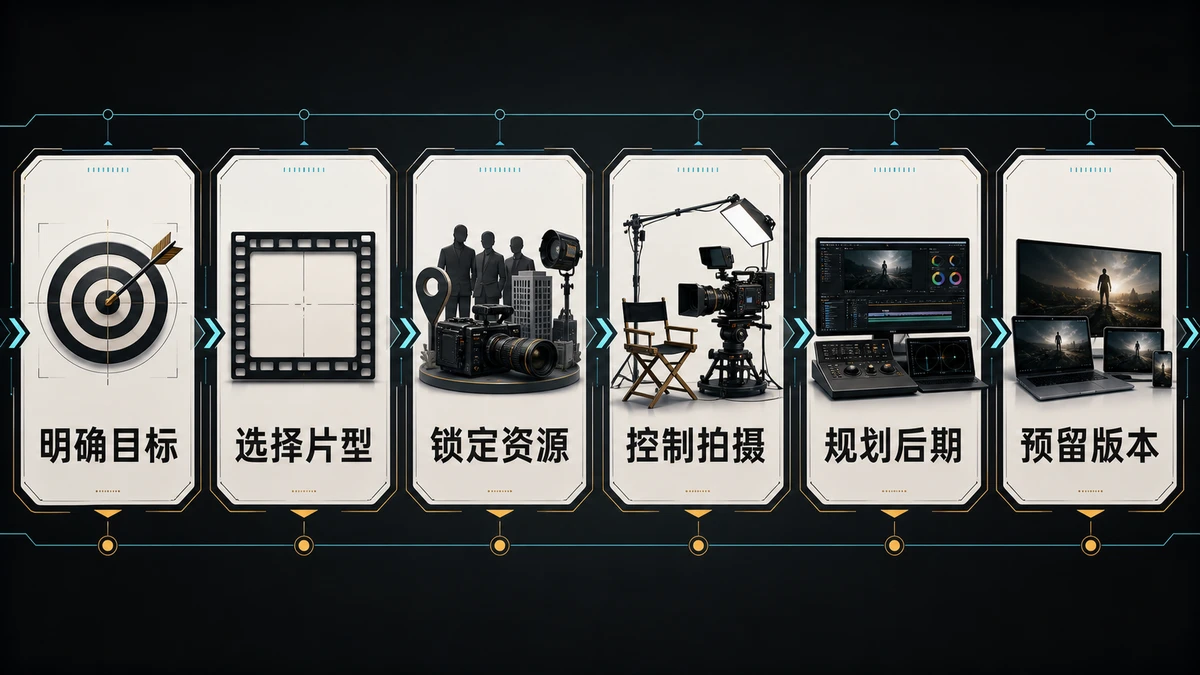
Professional advertising production budgeting is reflected in “why money is spent,” not “how much is spent.” Lock the objective first, then choose the video type and resources, and finally turn the main film into a content asset that can be used continuously. For cross-border ecommerce, overseas crowdfunding, and global Campaigns, versions, rights, and localization must move earlier. To break down a budget against a real brief, see ONCE Shenzhen TVC Advertising Production.